
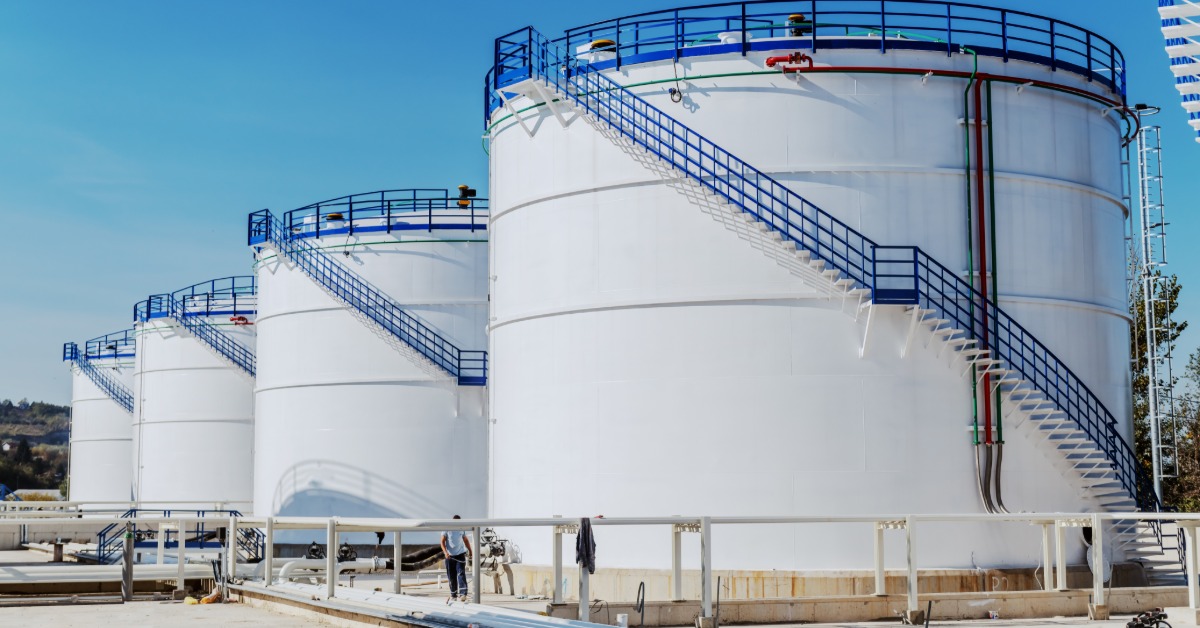
A storage tank can remain structurally sound while chemical exposure damages its interior surface. Without the right barrier, that contact can accelerate deterioration and eventually threaten containment.
Understanding why storage tanks need chemical-grade protection starts with the surface that stays in contact with the stored material. A properly selected liner separates that chemical from the tank wall, reducing direct exposure where damage often begins.
Chemical-grade protection should never be treated as a simple add-on. It needs to function as part of the complete storage system.
Chemical Exposure Can Attack the Tank From the Inside
Chemical storage creates prolonged contact between the tank interior and the stored material. That exposure can become increasingly aggressive when the tank holds concentrated chemicals or operates at elevated temperatures.
For instance, metal tanks can corrode from the inside when the stored product reacts with the substrate. Concrete, on the other hand, can deteriorate differently when aggressive chemicals attack its surface.
This is where a chemical-grade liner becomes important. Instead of letting the stored material contact the structural tank wall directly, the liner creates a separate interior barrier designed for the chemical environment.
Corrosion Can Develop Into a Containment Problem
Internal corrosion often begins quietly. A small area of pitting may not affect daily operation at first, but repeated chemical exposure can deepen that damage. As the metal thins, the tank becomes more vulnerable to leakage. Eventually, a localized weak point can compromise the barrier between the stored chemical and the surrounding environment.
Chemical-grade protection helps interrupt that process. A compatible liner separates corrosive contents from the structural shell, allowing the liner to serve as the contact surface while the tank provides strength.
Protection Should Begin Before Visible Failure
Operators should not wait for obvious damage before addressing chemical exposure. Surface deterioration can progress well before a leak becomes visible. A liner can provide preventive protection when the tank remains structurally suitable for service. However, it should never hide damage that requires repair.
The tank must first provide a stable foundation. Once repairs and surface preparation are complete, the liner can perform its intended role without compensating for structural problems.

Chemical Compatibility Determines Liner Performance
Chemical-grade protection only works when the liner material can withstand the substance inside the tank. The term chemical-grade does not mean universal resistance. Different polymers respond differently to acids, solvents, and other aggressive substances. A liner that performs well in one chemical environment can degrade quickly in another.
Before selecting a liner, review the application carefully:
- Identify the exact chemical stored in the tank.
- Confirm its normal concentration.
- Review the expected operating temperature.
- Determine how long the liner stays in contact with the chemical.
- Account for process changes that alter exposure.
- Inspect the existing tank material and interior condition.
These details give the liner supplier a much stronger basis for recommending a material. They also help prevent decisions based on broad chemical categories that do not reflect actual service conditions.
Temperature Can Intensify Chemical Attack
Temperature changes more than the physical feel of a stored product. It can also affect how aggressively that product interacts with the liner material.
A liner that performs reliably at one temperature may react differently when the contents become significantly hotter. Higher temperatures can accelerate chemical interaction and place additional stress on the polymer.
Heat also affects the storage system's physical movement. As temperatures change, both the tank and liner can expand or contract.
If those materials move at different rates, seams and attachment points can experience concentrated stress. The liner must remain flexible enough to accommodate those changes without losing its barrier function.
Seams and Fittings Need Equal Protection
The liner sheet itself is only one part of the containment barrier. Seams, outlets, and other penetrations must provide the same level of protection. Every fitting interrupts the continuous liner surface. If that area is poorly finished, the chemical can reach a location that would otherwise remain isolated from the tank.
Fit also plays a major role around these connection points. A liner that pulls too tightly around an outlet can create stress in the surrounding material. Excess liner can create folds that make sealing more difficult.
When the liner follows the tank geometry closely, installers can complete penetrations without forcing the material into an unnatural position.
Incompatible Materials Can Lose Their Protective Properties
Chemical damage does not always appear as visible corrosion. Polymer liners can change physically when they encounter chemicals outside their compatibility range. Some materials become harder after prolonged exposure, while others can soften or swell.
These changes reduce the liner's ability to function as a dependable barrier. A brittle liner can crack when the tank moves, while excessive softening can affect shape and dimensional stability.
Flexible liner systems depend on a careful balance between durability and movement. The material must retain enough strength to resist chemical exposure while remaining flexible enough to follow the tank during normal operation.
Chemical-Grade Protection Supports Reliable Containment
The main purpose of chemical-grade protection comes down to containment. The stored material must remain inside the tank without damaging the surface that holds it.
Without an appropriate barrier, repeated chemical exposure can weaken the tank substrate. Once that process begins, material compatibility becomes directly tied to containment reliability.
A compatible liner gives operators more control over the surface that touches the stored chemical. Instead of relying entirely on the tank shell, they can use a contact material selected specifically for the application.
The liner can create a better chemical barrier without changing the tank's fundamental role. Chemical-grade protection does not eliminate the need for inspection or routine maintenance. It simply adds another level of control by reducing direct chemical exposure to the underlying tank.
Choose Protection Based on the Chemical Environment
Start with the exact product, not a general category. Its concentration affects how aggressively it interacts with the liner, and operating temperature can further change that interaction.
Understanding why storage tanks need chemical-grade protection ultimately comes down to controlling what the stored material contacts. A structurally sound tank can still deteriorate when its interior surface cannot tolerate prolonged chemical exposure.
Once you understand those conditions, liner selection becomes more precise. The goal is not simply to find a durable material. The goal is to choose one that can remain stable in the actual chemical environment while working with the tank's physical condition.
If you need durable, flexible chemical tank liners for storage, Royal Liner can help you evaluate your application and identify a lining solution suited to your tank and operating environment. Request a quote today to discuss your containment needs and take the next step toward stronger chemical protection.
Looking for the perfect solution for your tank, pit, or secondary containment?
We’re here to help! Our decades of experience as a tank lining company have given us exposure to a wide range of needs. Contact our team of tank lining specialists to discuss your needs and a solution, or request a quote today.