
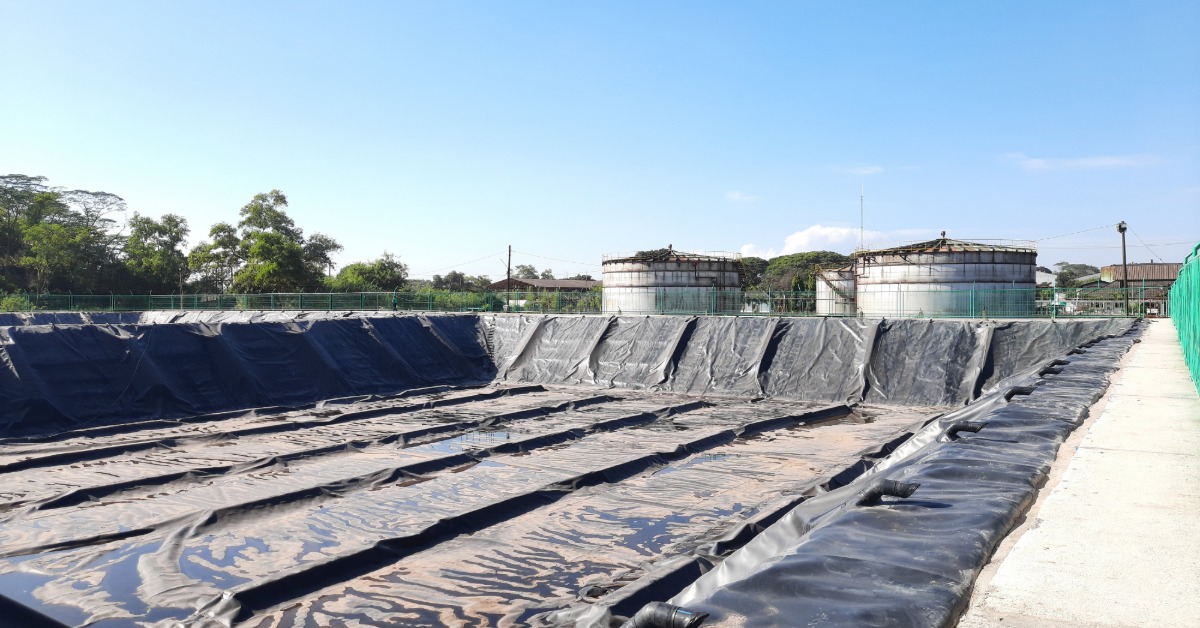
Chemical storage design affects safety, uptime, compliance, and asset life across water treatment and chemical processing facilities. Tank liners affect chemical storage directly by creating a barrier between stored chemicals and the tank substrate.
A liner system must match the chemical and operating demands of the tank. When facilities design the right lining system for safe chemical storage, they reduce corrosion risk and control contamination. Keep reading to learn more about the importance of liner design and how to design for chemical safety.
Why Tank Liner Design Matters
Chemical storage tanks face constant exposure to aggressive materials and fluctuating temperatures. Without the right internal protection, steel and concrete structures can degrade quickly and create costly operational problems.
A liner helps control that risk at the point of contact. It protects the tank shell from chemical attack while helping preserve product purity and system reliability.
Poor storage design often starts with the assumption that the tank substrate alone can handle the chemical load. That assumption can lead to corrosion, structural weakening, leaks, and unplanned shutdowns.
Safe storage design requires a full review of how the tank will operate over time. That review includes chemical concentration, fill and drain frequency, thermal exposure, and abrasion.
Matching The Liner To The Chemical Environment
No single liner material fits every chemical service. Storage systems for acids, caustics, oxidizers, and specialty process chemicals each require a material that can resist specific forms of chemical attack.
Chemical compatibility should guide every early design decision. A liner that performs well in one application may soften, crack, blister, or lose bond strength in another.
Facility owners should evaluate more than the chemical name on a data sheet. Storage temperature, solution strength, impurities, and cleaning agents can all change how a lining system performs.
A properly selected chemical containment liner accounts for the full service environment rather than one isolated operating condition. That approach helps facilities avoid premature failure and maintain a more predictable maintenance cycle.
Substrate Protection And Structural Reliability
Chemical storage tanks do more than hold product. They support process continuity, protect nearby equipment, and help facilities meet environmental and worker safety obligations.
When chemicals attack a steel or concrete substrate, damage can move beyond the surface. Corrosion under insulation or concrete spalling can escalate into serious structural issues if facilities do not act early.
A liner system helps interrupt that damage path. By separating the chemical from the substrate, the liner reduces direct exposure and helps preserve the mechanical integrity of the tank.
That protection matters even more in aging facilities with legacy assets. Many plants continue to operate tanks long after original construction, so lining performance becomes a critical part of long-term asset management.
Preventing Contamination In Chemical Treatment Operations
Storage safety includes product integrity as well as tank integrity. In water and chemical treatment settings, contamination can compromise treatment performance, affect downstream chemistry, and trigger compliance concerns.
Tank liners help maintain a cleaner storage environment by reducing direct contact between the chemical and the tank wall. This barrier can limit corrosion byproducts, surface breakdown, and particulate generation inside the vessel.
That level of control matters in applications that demand stable chemical quality. Treatment chemicals must perform as intended, and storage design should support that requirement from delivery through dispensing.

Designing For Seams, Penetrations, And High-Stress Areas
Safe tank lining design requires attention to details that often fail first. Seams, nozzles, welds, corners, anchors, and floor-to-wall transitions all create stress points that demand careful engineering.
These areas can experience differential movement and localized chemical exposure. If the lining system does not address those conditions, small defects can expand into leaks or delamination.
A strong design process reviews each internal feature of the tank before fabrication or installation begins. That process helps the manufacturer specify the right liner thickness, attachment method, and reinforcement strategy for the application.
Penetration details deserve special focus in chemical storage tanks. Pipe entries, level instruments, and access points must integrate with the liner system without creating weak points around edges or fasteners.
Installation Quality Drives Performance
Even the right liner material can fail if installation quality falls short. Surface preparation, dimensional fit, seam construction, environmental controls, and final inspection all influence service life.
Safe storage design should include installation requirements from the start rather than treat them as field decisions. That means defining substrate condition, tolerances, curing needs, and inspection criteria before work begins.
Manufacturers and facility teams should coordinate closely during shutdown planning and installation sequencing. Strong communication reduces delays and helps prevent avoidable defects that surface only after the tank returns to service.
Inspection And Maintenance Should Start At The Design Stage
Tank liner safety does not end after installation. Facilities need a practical plan for inspection and repair evaluation throughout the service life of the system.
Design teams should make inspection access part of the storage strategy. Access points, outage timing, and maintenance windows all affect how well a facility can monitor liner condition before damage spreads.
Early signs of lining wear can include discoloration, blistering, cracking, seam separation, or bond loss. Routine inspection helps facilities identify these issues before they turn into leaks, contamination, or substrate damage that could require full tank replacement.
Key Design Priorities For Safer Chemical Storage
The safest storage systems follow a disciplined design process that connects chemical exposure, tank construction, liner selection, and long-term maintenance. Facility owners should expect liner manufacturers to address each of these factors before recommending a system.
- Verify chemical compatibility across normal and upset conditions
- Review operating temperature and concentration ranges
- Evaluate substrate condition and structural demands
- Identify seams, penetrations, and transition details
- Define inspection, maintenance, and repair requirements
Compliance And Risk Management Benefits
Chemical storage design carries regulatory and operational consequences. Failures can affect worker safety, environmental reporting, insurance exposure, and plant production schedules.
A properly engineered tank liner supports compliance by helping control leaks, preserve containment, and reduce the likelihood of substrate-related failures. It also helps facilities document a more defensible approach to asset protection and risk reduction.
Choosing A Manufacturing Partner With Application Expertise
Tank liner selection should not rely on a generic product recommendation. Chemical storage environments vary too much for a one-size-fits-all approach.
A qualified liner manufacturer should review the full service profile of the tank, understand the facility’s operational constraints, and recommend a system based on performance requirements. That level of technical support helps facility owners make stronger decisions before problems appear in the field.
Application expertise also improves project execution. Manufacturers that understand chemical storage design can address fabrication tolerances and maintenance access in a more practical way.
That experience matters most when the storage application involves aggressive chemicals, older infrastructure, or strict operational limits. In these cases, small specification errors can create major long-term costs.
Build Safer Storage With Royal Liner
Safe chemical storage starts with the right tank liner system. Royal Liner helps facilities specify liners that protect tank substrates, support compliance, and perform in demanding chemical and water treatment environments.
Royal Liner works with facility owners to evaluate service conditions, lining requirements, and installation demands before failure becomes a larger risk. For facilities planning new storage systems or upgrading existing tanks, our liners offer a practical path to safer, longer-lasting chemical containment.
Looking for the perfect solution for your tank, pit, or secondary containment?
We’re here to help! Our decades of experience as a tank lining company have given us exposure to a wide range of needs. Contact our team of tank lining specialists to discuss your needs and a solution, or request a quote today.