

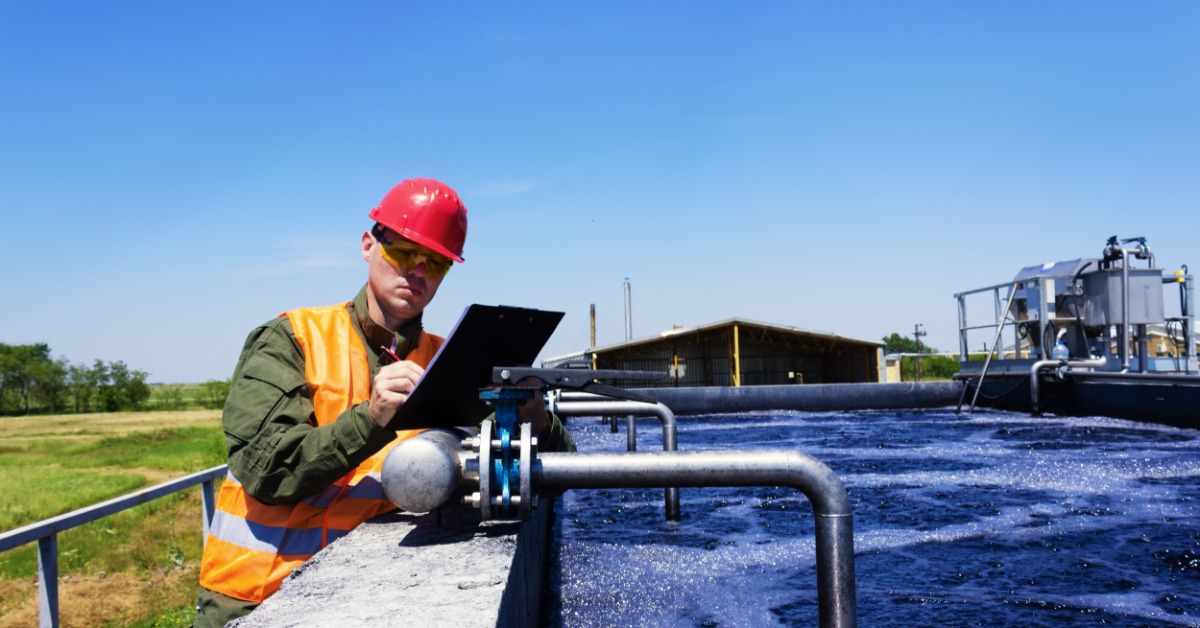
When working in a water treatment plant or other facilities that utilize tank liners, there are several signs of damage and issues to watch out for. One of these situations is liner delamination – a process of separation in tank lining materials. Learn some of the most common causes and warning signs of liner delamination and how to prevent it in your facility.
What Is Liner Delamination?
Liner delamination occurs when a lining system loses adhesion and separates from the tank substrate. The separation can start as small blisters or localized lifting and then spread across high-stress zones.
Delamination increases leakage risk, accelerates corrosion under the liner, and raises compliance exposure for potable water, wastewater, and industrial process storage. Repair costs rise quickly when separation expands beyond localized areas.
Why Adhesion Fails in Lined Water Tanks
Adhesion depends on surface profile, cleanliness, dryness, and chemical compatibility between the substrate, primer, and liner. Any breakdown in those fundamentals creates a weak boundary layer that cannot tolerate hydraulic pressure, thermal movement, or disinfection cycles.
Most delamination cases trace back to preventable installation or operating conditions rather than “age” alone. A lining system can deliver long service life when facility teams control surface preparation, environmental conditions, and ongoing water chemistry.
Surface Preparation Errors That Trigger Delamination
Insufficient abrasive blasting leaves old coating residue, mill scale, or corrosion products that block mechanical bonding. Even small amounts of embedded contaminants can create a continuous weak layer that fails under stress.
Poor surface profile also causes failure, especially when blasting leaves the surface too smooth for the specified liner thickness and resin type. Excessive profile can create sharp peaks that cut into primers and reduce effective film build at peak locations.
Residual Dust, Salts, and Oils That Undermine Bonding
Abrasive dust and fine particulates interfere with primer wetting and reduce contact between resin and substrate. Crews must remove dust through vacuuming and verified wipe-down methods that match the project specification.
Oil contamination from compressors, handling, or process residues prevents proper wetting and creates localized lifting that often spreads along seams and welds.
Moisture and Condensation During Installation
Moisture creates a direct barrier to adhesion and also promotes flash rust that destabilizes primer bonding. Condensation can form quickly when tank walls fall below the dew point, even in otherwise “dry” weather.
Crews must control dew point spread and maintain substrate temperature above the minimum specified by the coating manufacturer. Dehumidification and ventilation must match tank size, access limitations, and ambient conditions throughout surface prep and lining application.
Improper Cure Windows and Recoat Timing
Coatings require specific recoat windows to achieve chemical bonding between layers. Missed windows force reliance on mechanical bonding, which often underperforms in immersion service.
Shortened cure times create soft films that trap solvents or water, and those films fail when the tank returns to service. Extended delays can cause surface oxidation or contamination that reduces intercoat adhesion unless crews perform proper surface conditioning.
Mixing, Thickness, and Application Control Problems
Poor mixing technique can leave unmixed components that cure unevenly and create weak zones. Film thickness drives performance in immersion, but thickness errors cut both ways. Low film build reduces barrier protection, while excessive build can increase internal stress and raise the chance of cracking and delamination at corners, lap joints, and weld heat-affected zones.
Substrate Movement, Vibration, and Structural Stress
Tanks expand and contract with temperature swings, filling cycles, and structural loading. A liner must tolerate movement without shear failure at the bond line.
High vibration from nearby pumps, mixers, or process equipment can fatigue the bond over time. Delamination often starts at nozzles, penetrations, supports, and weld seams where stress concentrates and inspection access remains limited.
Chemical and Water Quality Factors That Break Down Liners
Water chemistry attacks lining systems through oxidation, hydrolysis, and permeation. Free chlorine, chloramines, ozone, and other oxidants can degrade certain polymers and reduce adhesion at the interface.
Low pH, high temperature, and aggressive ions can accelerate chemical attack and osmotic blistering. Facilities must align liner selection with operating conditions, including shock dosing events, seasonal temperature shifts, and cleaning protocols.
Underfilm Corrosion and Osmotic Blistering
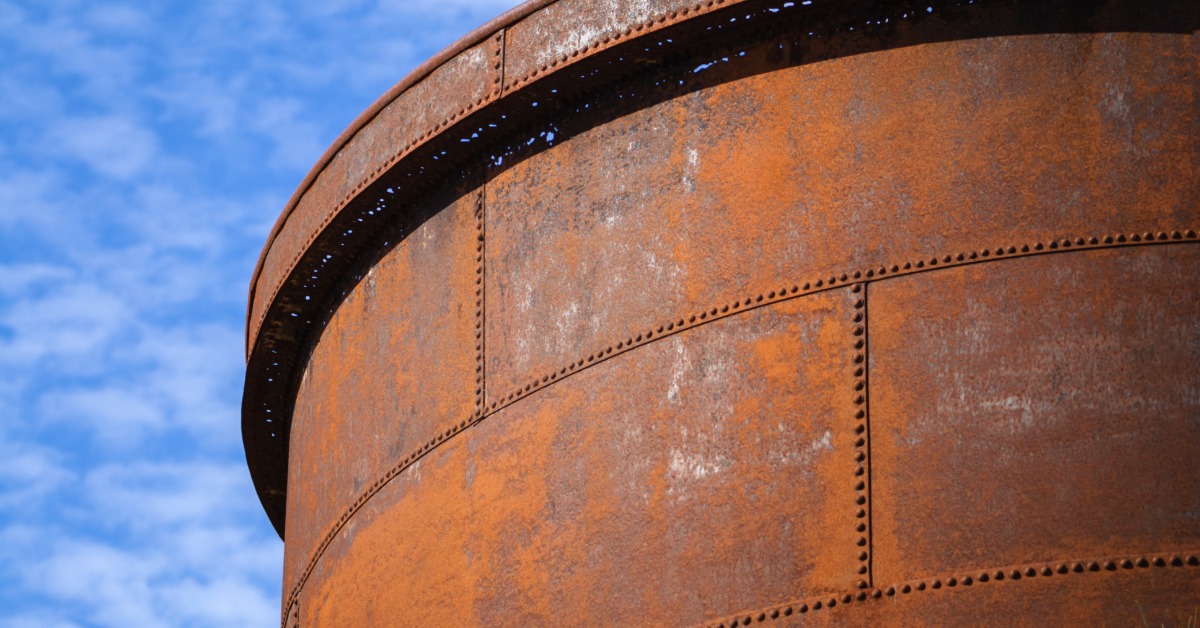
Corrosion under the liner generates expansive corrosion products that push the lining away from the steel or concrete surface. Once water reaches that interface, corrosion can progress quickly in low-oxygen crevice conditions.
Osmotic blistering develops when soluble contaminants remain on the substrate or within porous concrete. Water migrates through the lining to equalize concentration gradients, which builds pressure and lifts the system from the surface.
How to Prevent Delamination Through Design and Specification
Prevention starts with a specification that matches service environment, substrate type, and operational realities. The specification must define surface prep standards, salt limits, profile targets, climate control requirements, and inspection hold points.
Material selection should address immersion rating, disinfectant resistance, permeation performance, and repairability. Facilities with secondary containment needs should also coordinate tank lining decisions with related assets such as a spill containment liner to maintain consistent chemical resistance across systems.
Installation Practices That Reduce Risk
Crews must verify surface cleanliness through objective checks rather than visual judgment alone. Application control requires strict batch tracking, verified mix ratios, and wet and dry film thickness measurements. Cure control requires temperature and humidity management until the system reaches the specified hardness and chemical resistance milestones.
Quality Assurance That Catches Problems Early
Inspection must focus on adhesion risk indicators such as flash rust, condensation events, and contamination at welds and corners. Holiday testing, hardness checks, and targeted adhesion testing can identify weak zones before return to service.
Documentation also matters for long-term asset management. Clear records of environmental readings, surface prep results, product batch numbers, and cure verification support warranty claims and guide future maintenance planning.
Operations and Maintenance Steps That Protect the Bond Line
Operational teams can extend liner life by stabilizing water chemistry, managing disinfectant dosing, and avoiding unplanned chemical excursions. Cleaning procedures should match liner compatibility, including limits on temperature, concentration, and dwell time.
Routine inspections should prioritize penetrations, waterlines, and high-stress transitions where delamination tends to initiate. Early intervention with localized repairs prevents underfilm corrosion and reduces the chance of full relining projects.
Signs of Early Delamination and What to Do Next
Blistering, soft spots, edge lifting, and discoloration along seams can signal loss of adhesion. Unusual odors after draining, localized rust staining, or persistent damp areas behind the liner also warrant investigation.
A qualified lining contractor should confirm the failure mechanism through site conditions review and targeted testing. Corrective action should address root cause, not only the visible separation, or delamination will recur after repair.
Royal Liners Support for Long-Term Liner Performance
Royal Liners supports facility owners and water treatment plant managers with lining systems designed for immersion service and demanding operating conditions. Project teams can help align surface preparation, cure control, and water chemistry considerations to reduce these causes of liner delamination and protect uptime.
For assistance with specifying, installing, or troubleshooting a water tank lining system, contact Royal Liners to schedule a condition assessment and recommendations tailored to site conditions and operating parameters.
Looking for the perfect solution for your tank, pit, or secondary containment?
We’re here to help! Our decades of experience as a tank lining company have given us exposure to a wide range of needs. Contact our team of tank lining specialists to discuss your needs and a solution, or request a quote today.